
De Zot
c. 1525 - c. 1550
Medium
lead (metal)
Dimensions
24; 7; 4.5
Rights
Public Domain
About this artwork
hoogte 4,5 cm x breedte 7 cm x gewicht 24 gr
Art Historical Context
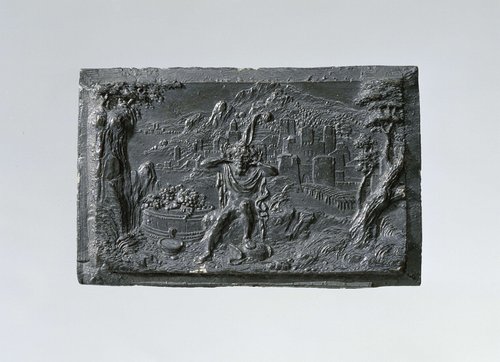
**De Zot by Peter Flötner (. 1525–c. 1550)** This charming small-scale lead sculpture, titled *De Zot* ("The Fool" in Dutch), the whimsical spirit of the Northern Renaissance. Created by Peter Flötner, a Nuremberg artist known for his intricate metalwork and grotesque figures, the piece measures just 4. cm high by 7 cm wide and a mere 24 grams. Flötner, active in the early 16th century, Italian Renaissance influences with the earthy humor of German craftsmanship, often depicting fools and jesters to satirize human folly. Crafted in lead—a durable yet affordable metal for casting detailed reliefs or figurines—this work highlights the technical prowess of period foundries. Unlike grand bronzes, its intimate size suggests it was a tabletop ornament, collector's item, or even a playful pendant, reflecting Nuremberg's booming trade in luxury small sculptures. Lead's malleability allowed Flötner to render expressive features with sharp clarity, emphasizing the fool's exaggerated traits in a style that foreshadowed Mannerism. In Renaissance culture, fools symbolized wisdom through absurdity, appearing in art, literature, and courtly life. *De Zot* invites visitors to ponder this duality, offering a tangible glimpse into the era's blend of piety and playfulness. A delightful survivor from Flötner's workshop, it reminds us how tiny objects can pack big ideas.
About the Artist
Peter Flötner · 1485–1546
Peter Flötner (c. 1485–1546) was a German sculptor, ornament designer, and medalist whose work played a central role in the transmission of Italian Renaissance decorative vocabulary into the German-speaking lands. Though his exact origins remain uncertain — he may have trained in Augsburg before settling permanently in Nuremberg around 1522 — his formation evidently included exposure to Italian Re...