
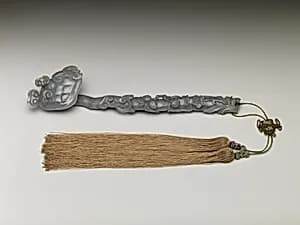
Decorative Accessory (Ruyi) with Longevity Fungus, Peaches, and Narcissus
Unknown Artist
18th century
Medium
Jade (jadeite)
Dimensions
H. 14 in. (35.5 cm); W. 3 1/8 in. (8 cm); D. 1 1/8 in. (2.9 cm)
Classification
Jade
Culture & Period
China · Qing dynasty (1644–1911)
Department
Asian Art
Museum
Metropolitan Museum of Art, New York, NY
Credit
Gift of Heber R. Bishop, 1902
Accession Number
02.18.491
Rights
Public Domain
Art Historical Context
This exquisite jade ruyi scepter, crafted in the 18th century during China's Qing dynasty (1644–1911), exemplifies the era's masterful jade carving traditions. Standing 14 inches tall, the accessory—shaped like a stylized lingzhi fungus—served as a ceremonial object symbolizing power, good wishes, and imperial favor. Ruyi ("as you wish") scepters were popular gifts among elites, often presented at weddings, birthdays, or court ceremonies to invoke prosperity and harmony. Carved from vibrant jadeite, a prized nephrite variant prized for its translucency and durability, the piece features intricate motifs of longevity fungus (lingzhi), peaches of immortality, and blooming narcissus. These auspicious symbols evoke eternal life, abundance, and renewal—core themes in Chinese cosmology. Qing artisans, likely from imperial workshops, employed delicate incising and piercing techniques to bring the forms to life, highlighting the stone's natural veining for a luminous effect. A gift to the Metropolitan Museum of Art from Heber R. Bishop in 1902, this ruyi reflects the dynasty's opulent aesthetic and enduring cultural reverence for jade as a bridge between heaven and earth. Visitors, admire how its elegant form captures timeless aspirations for longevity and bliss.