
Denarius (Coin) Depicting Bonus Eventus
62 or 54 BCE
Medium
Silver
Dimensions
Diam.: 2.1 cm (7/8 in.)
Classification
coin
Department
Arts of Greece, Rome, and Byzantium
Museum
Art Institute of Chicago
Accession Number
139852
Rights
Public Domain
About this artwork
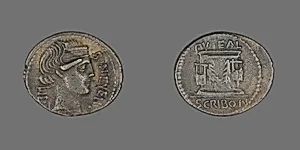
The front (obverse) of this coin depicts Bonus Eventus, the divine personification of good outcomes, facing right and wearing a diadem. On the back (reverse) the Puteal Scribonianum, a buidling which stood in the Roman Forum, is decorated with a garland and two lyres.
Art Historical Context
Step into the bustling world of the late Roman Republic with this exquisite silver denarius, minted around 62 or 54 BCE. Measuring just 2.1 cm in diameter, this tiny treasure from the Art Institute of Chicago's Arts of Greece, Rome, and Byzantium collection depicts Bonus Eventus, the Roman god of agricultural prosperity and good fortune. Often portrayed with symbols like a cornucopia or grain stalks, he embodied hopes for bountiful harvests and successful endeavors—vital concerns in an agrarian society facing political upheaval. As a standard silver coin worth ten bronze asses, the denarius was the backbone of Roman commerce and propaganda. Struck by moneyers (often elite families), these coins featured finely engraved obverse and reverse designs, showcasing the era's masterful die-striamping techniques. The portrait-style imagery of deities like Bonus Eventus promoted virtues of abundance, subtly aligning issuers with divine favor amid rivalries between figures like Pompey and Crassus. This coin offers a glimpse into daily Roman life, where even pocket change carried cultural weight, blending artistry, religion, and politics in a portable format. A testament to ancient minting precision, it survives as a shimmering link to Rome's republican zenith.
About the Artist
Ancient Roman
The artists attributed to "Ancient Roman" in museum collections represent the anonymous craftsmen who produced the vast output of sculpture, frescoes, mosaics, and reliefs defining Roman visual culture from the Republic (c. 509–27 BCE) to the late Empire (c. 395 CE). Individual identities remain elusive, as Roman makers were typically viewed as skilled tradesmen—often enslaved Greeks or provincial...