
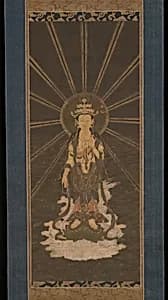
十一面観音来迎図|Descent of Eleven-Headed Kannon
mid–late 16th century
Medium
Hanging scroll; ink, color, and gold on silk
Dimensions
Image: 36 1/2 × 15 1/2 in. (92.7 × 39.4 cm) Overall with mounting: 70 × 22 7/16 in. (177.8 × 57 cm) Overall with knobs: 70 × 24 in. (177.8 × 61 cm)
Classification
Paintings
Culture & Period
Japan · Muromachi period (1392–1573)
Department
Asian Art
Museum
Metropolitan Museum of Art, New York, NY
Credit
H. O. Havemeyer Collection, Gift of Mrs. J. Watson Webb, 1930
Accession Number
30.72.3
Rights
Public Domain
Tags
Art Historical Context
Behold the *Descent of Eleven-ed Kannon*, a hanging scroll from Japan's Muromachi period (13921573), created by unidentified artist in the mid to late 16th century. Crafted in ink, color, and on silk, this vertical painting measures about 36½ × 15½ inches, designed to be unrolled for intimate contemplation in a temple or private devotional space. The format exemplifies the elegance of Japanese scroll art, allowing sacred imagery to unfold like a divine revelation. At its heart is the Eleven-Headed Kannon, a compassionate bodhisattva embodying Avalokiteshvara, the Buddhist deity of mercy. The multiple heads symbolize the ability to perceive suffering in all directions, while the "descent" motif depicts Kannon descending from paradise to welcome souls or aid the faithful— a powerful theme in Pure Land Buddhism, which flourished during the Muromachi era amid social upheaval. Rich gold accents and vibrant colors on silk evoke otherworldly splendor, heightening the scroll's spiritual potency and inviting viewers into a realm of salvation. This rare treasure, part of the Metropolitan Museum of Art's H. O. Havemeyer Collection, reflects Japan's devotion to esoteric Buddhist iconography, blending artistry with profound faith. Gaze upon it and feel the timeless pull of compassion.