
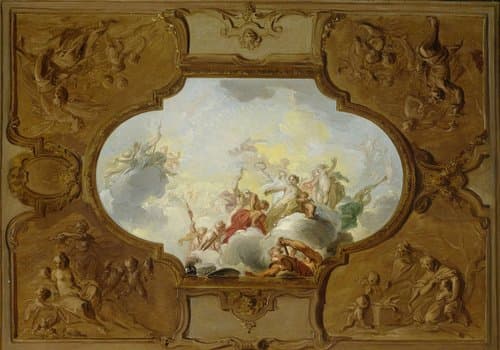
Design for a ceiling painting with the Apotheosis of Aeneas, in the corners the Four Seasons
ca. 1720 - ca. 1725
Medium
oil on canvas
Dimensions
51.5; 69.5
Rights
Public Domain
About this artwork
hoogte 51,5 cm x breedte 69,5 cm
Art Historical Context
Jacob de Wit, a leading Dutch artist of the early 18th century, created this lively oil sketch as a preparatory for a grand ceiling painting Working in the Baroque tradition with echoes of Rubens and Italian masters de Wit specialized in illusionistic decorations for civic buildings and private homes in Amsterdam. His small-scale, like this one measuring just over half a meter, allowed patrons to visualize how dramatic scenes would appear from below. The central subject depicts the apotheosis Aeneas, the Trojan hero from Virgil’s Aeneid who ascends to divine status. In the four corners, personifications of the Seasons—Spring, Summer, Autumn, and Winter—frame the composition, blending classical mythology with the natural cycle of time. Such themes were popular in the Dutch Republic, celebrating heroic virtue and the ordered harmony of the universe. Painted on canvas rather than directly on plaster, this work highlights de Wit’s fluid brushwork and skillful foreshortening, techniques essential for creating convincing overhead illusions. Today it offers visitors a rare glimpse into the creative process behind the elaborate ceiling decorations that once adorned elite interiors.
About the Artist
Jacob de Wit · 1695–1754
Comment on works: Religious; Allegory; Bas-relief