
Design for a Theatre, or Hall for a Special Fête
1688–90
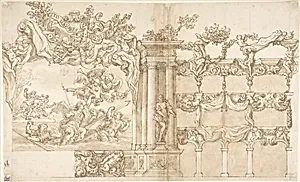
Medium
Pen and brown ink, brush and brown wash, over leadpoint or black chalk
Dimensions
10 1/2 x 17 1/16 in. (26.6 x 43.4 cm)
Classification
Drawings|Ornament & Architecture
Department
Drawings and Prints
Museum
Metropolitan Museum of Art, New York, NY
Credit
The Elisha Whittelsey Collection, The Elisha Whittelsey Fund, 1952
Accession Number
52.570.295
Rights
Public Domain
Tags
Art Historical Context
This exquisite architectural drawing by Giacomo Chiavistelli, dated 1688–90, presents a visionary design for a grand theatre or ceremonial hall suited for lavish fêtes. Created during the height of the Italian Baroque era, it captures the opulent spirit of late 17th-century Rome, where elaborate spectacles—think masked balls, operas, and courtly entertainments—demanded spaces blending architecture with theatrical illusion. Chiavistelli, a specialist in scenography and temporary structures, likely envisioned this as a multifunctional venue, its tiered seating and proscenium arch evoking the dramatic flair of venues like the Teatro Olimpico. The drawing's medium—pen and brown ink with brush and brown wash over leadpoint or black chalk—exemplifies Baroque drafting techniques. The precise lines delineate structural elements, while the subtle wash creates depth and shadow, transforming a flat sketch into a vivid, almost three-dimensional stage set. Such preparatory works were essential for patrons commissioning ephemeral grandeur, highlighting architecture's role in cultural pageantry. Housed in the Metropolitan Museum of Art's Drawings and Prints department, this piece from The Elisha Whittelsey Collection offers a window into how Baroque artists fused engineering with fantasy, making public celebrations unforgettable events. (198 words)