
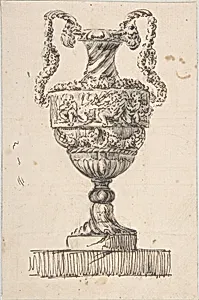
Design for a Vase (recto); Sketch of Small Vase (verso)
ca. 1752
Medium
Pen and brown ink over graphite (recto); graphite (verso)
Dimensions
9 1/4 x 6 1/16 in. (23.5 x 15.4 cm)
Classification
Drawings|Ornament & Architecture
Department
Drawings and Prints
Museum
Metropolitan Museum of Art, New York, NY
Credit
The Elisha Whittelsey Collection, The Elisha Whittelsey Fund, 1948
Accession Number
48.148(29)
Rights
Public Domain
Tags
Art Historical Context
Jacques François Joseph Saly, prominent French sculptor active in the mid-18th century, this delicate *Design for a Vase (recto) around 1752, with a quick *Sketch of Small Vase (verso). Rendered on a modest sheet measuring just 9¼ x 6⅛ inches, it exemplifies the preparatory drawings essential to the ornamental arts of the Rococo era. Saly's elegant lines capture the ornate, flowing forms typical of luxury vases destined for grand European interiors, blending sculptural precision with decorative flair. The recto features meticulous pen and brown ink over graphite, allowing Saly to refine initial underdrawings into intricate details—scrolls, acanthus leaves, and curvaceous handles that evoke the period's love for asymmetry and whimsy. The verso's looser graphite sketch reveals the artist's iterative process, a common practice among designers supplying porcelain manufactories or silversmiths. Such works bridged fine art and craft, influencing objects from Sèvres porcelain to gilded bronzes. Housed in the Metropolitan Museum of Art's Drawings and Prints department, this piece from The Elisha Whittelsey Collection highlights the technical virtuosity behind 18th-century opulence. For visitors, it offers a window into how Rococo masters like Saly transformed sketches into symbols of refined taste and cultural sophistication.