
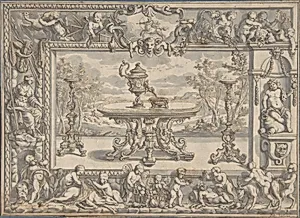
Design for an Ewer, table and candelabra within an ornamental frame
1660–1727
Medium
Pen and brown ink, brush and gray wash. Incised for transfer.
Dimensions
8 5/16 x 11 9/16 in. (21.1 x 29.3 cm)
Classification
Drawings
Department
Drawings and Prints
Museum
Metropolitan Museum of Art, New York, NY
Credit
The Elisha Whittelsey Fund,1952
Accession Number
53.530.1
Rights
Public Domain
Tags
Art Historical Context
Abraham Drentwett the Elder (1647–1727), a master goldsmith from Augsburg, Germany, created this intricate design during the height of the Baroque era, a time when opulent silverware symbolized wealth and status among European nobility. Titled *Design for an Ewer, Table, and Candelabra within an Ornamental Frame*, the drawing bursts with fantastical motifs: playful putti (cherubic figures), majestic tigers, birds, dogs, and goats, all woven into a lavish frame. These elements reflect the exuberant, theatrical style of South German ornamental design, blending realism with whimsy to inspire grand household objects like ewers (ornate pitchers), sturdy tables, and multi-branched candelabra. Executed in pen and brown ink with brush and gray wash, the sheet measures 8 5/16 x 11 9/16 inches and features incised lines for transfer—a practical technique silversmiths used to outline designs directly onto metal sheets before hammering and chasing. This preparatory drawing, now in the Metropolitan Museum of Art's Drawings and Prints department (acquired via The Elisha Whittelsey Fund in 1952), highlights Drentwett's pivotal role in Augsburg's silver trade, a hub of Baroque craftsmanship that influenced courts across Europe. Imagine this design transformed into shimmering silver, illuminating a lavish banquet hall—its lively creatures evoking the era's love for nature's drama and divine playfulness. A testament to the fusion of art and function, it invites us to appreciate the unseen labor behind enduring luxury.