
Design for Screen
1841–84
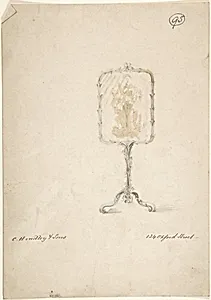
Medium
Pen and ink, brush and wash, over graphite
Dimensions
sheet: 9 13/16 x 6 7/8 in. (24.9 x 17.5 cm)
Classification
Drawings|Ornament & Architecture
Department
Drawings and Prints
Museum
Metropolitan Museum of Art, New York, NY
Credit
Harris Brisbane Dick Fund, 1946
Accession Number
46.38.28
Rights
Public Domain
Tags
Art Historical Context
This delicate *Design for Screen* by the London firm Charles Hindley and, dating from 1841–84, offers a glimpse into Victorian-era design. During the mid-19th century, screens were essential furnishings in British homes, serving as elegant room dividers, privacy shields, or decorative focal points amid the era's fascination with ornate domestic spaces. Hindley and Sons, renowned for their Gothic and Rococo Revival furniture, specialized in such commissioned pieces, blending historical motifs with contemporary craftsmanship. Rendered in pen and ink with brush and wash over graphite on a modest 9 13/16 x 6 7/8-inch sheet, the drawing exemplifies precise preparatory techniques for ornamental architecture. The graphite underdrawing allowed for fluid sketching, while ink lines added sharp definition and washes provided tonal depth, simulating the textures of carved wood or fabric panels. This methodical approach ensured accurate translation from concept to production. Housed in The Metropolitan Museum of Art's Drawings and Prints department, this work highlights the artistry behind everyday luxury. It invites us to appreciate how Victorian designers elevated functional objects into statements of taste and status, bridging fine art and applied design.
About the Artist
Charles Hindley and Sons · 1841–1917
**Charles Hindley and Sons: Victorian Masters of Furnishing Design** Charles Hindley and Sons was a premier British cabinet-making and upholstery firm based in London, operating primarily from 134 Oxford Street. Established around 1820 by Charles Hugh Hindley, a furniture maker and upholsterer initially on Berners Street, the firm expanded significantly in 1844 by acquiring the rival establishmen...