
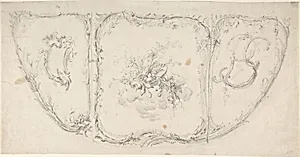
Design for the Side of a Carriage
ca. 1750–80
Medium
Graphite
Dimensions
7 3/16 x 14 in. (18.2 x 35.5 cm)
Classification
Drawings
Department
Drawings and Prints
Museum
Metropolitan Museum of Art, New York, NY
Credit
Gift of János Scholz, 1965
Accession Number
65.673.1
Rights
Public Domain
Tags
Art Historical Context
Step into the opulent world of 18th France with this delicate graphite drawing, *Design for the Side of Carriage*, created anonymously around 1750–80. just 7 3/16 x 14 inches, this precise sketch outlines an elegant ornamental panel intended for the side of a luxury carriage. Rendered in graphite—a favored medium for its fine lines and subtle shading—this work captures the intricate detailing that defined aristocratic vehicles of the Rococo era. In the lavish courts of Louis XV, carriages were rolling symbols of status, often customized with elaborate motifs like scrolling vines, shells, and floral garlands to evoke movement and whimsy. This design exemplifies the period's ornamental flair, blending functionality with artistry as draftsmen in Parisian workshops planned these mobile masterpieces. Such drawings were essential blueprints, guiding gilders and painters to transform plain wood into glittering spectacles parading through Versailles or Paris streets. Today, preserved at the Metropolitan Museum of Art through the generous gift of János Scholz in 1965, this anonymous gem offers a glimpse into the collaborative craft of decorative arts. It highlights how even preparatory sketches embodied the cultural obsession with refinement, bridging architecture, fashion, and transportation in pre-Revolutionary France.
About the Artist
Anonymous, French, 18th century · 1700–1800
The artist known as Anonymous, French, 18th century, represents a collective of unidentified talents active roughly between 1700 and 1800, a period of profound artistic evolution in France from the opulent Rococo to the austere dawn of Neoclassicism and Revolutionary fervor. Little is documented about their personal training or mentors, as their anonymity obscures individual biographies, though th...