
Design from Gray, Maine 1800 (no. 2): From Proposed Portfolio "Maine Wall Stencils"
1935/1942
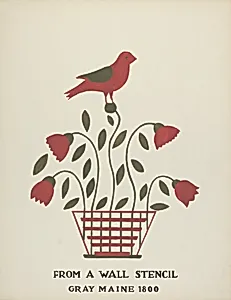
Medium
watercolor and gouache on paperboard
Dimensions
overall: 45.9 x 35.5 cm (18 1/16 x 14 in.)
Classification
Index of American Design
Department
CG-W
Museum
National Gallery of Art, Washington, D.C.
Credit
Index of American Design
Accession Number
1943.8.18117
Rights
Public Domain
Art Historical Context
Step into the vibrant world of American folk art with *Design from Gray, 1800 (no. 2)*, a captivating watercolor and gouache rendition Mildred E. Bent. between 1935 and 1942, this work is part of the proposed portfolio *Maine Wall Stencils* within the Index of American Design—a monumental WPA Federal Art Project that employed artists during the Great Depression to meticulously document the nation's decorative traditions. Bent's piece faithfully recreates a stencil pattern from Gray, Maine, around 1800, measuring 45.9 x 35.5 cm and now housed in the National Gallery Art. Wall stenciling flourished in rural New England homes during the Federal period, offering an affordable alternative to expensive wallpapers or imported textiles. In Maine, these bold motifs—often floral, geometric, or patriotic—adorned walls, floors, and furniture, reflecting the ingenuity of local artisans and homemakers. Bent's use of watercolor and gouache on paperboard brings the design's lively colors and intricate details to life, preserving a slice of everyday Americana that might otherwise have faded into obscurity. This artwork underscores the Index's mission to celebrate America's cultural heritage, bridging 19th-century craftsmanship with 20th-century preservation efforts. It's a delightful reminder of how simple stencils transformed humble interiors into personalized expressions of pride and creativity.
About the Artist
Mildred E. Bent · 1855–present
Mildred E. Bent remains one of the more elusive figures in early twentieth-century American art, her biographical details largely undocumented in the historical record. She appears to have worked within the traditions of her era, producing a body of work substantial enough to leave a meaningful impression in the collections that have preserved her name, even as the personal circumstances of her tr...