
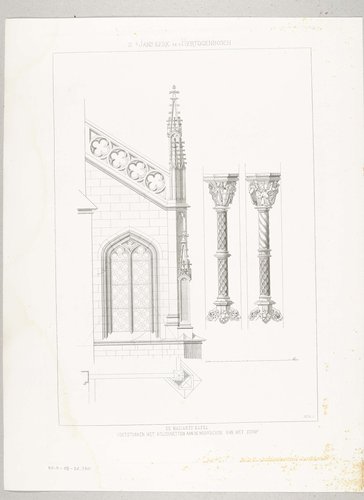
Detailaanzicht van een steunbeer en twee pilaren
1875 - 1895
Medium
etching
Dimensions
516; 338
Rights
Public Domain
About this artwork
plaatrand: hoogte 516 mm x breedte 338 mm
Art Historical Context
This etching by Petrus Johannes Arendzen captures a architectural detail of a buttress flanked by two pillars, rendered with the meticulous linework characteristic of late-nineteenth-century Dutch printmaking. Created between 1875 and 1895, the work reflects the period’s growing interest in documenting historic structures, particularly Gothic and Romanesque elements found in Dutch churches and civic buildings. Arendzen, known for his architectural subjects, used etching to translate the textures of stone and the play of light across masonry into a durable, reproducible image. Measuring over half a meter in height, the large plate allows viewers to appreciate the structural logic of medieval building techniques up close. The medium’s fine, controlled lines emphasize the contrast between the solid mass of the buttress and the slender verticality of the pillars, inviting contemplation of how such forms distribute weight and create visual rhythm. As part of a broader tradition of architectural studies, this print served both artistic and educational purposes, preserving visual records of buildings that were increasingly valued for their cultural heritage. Today the etching offers modern audiences an intimate encounter with the craftsmanship of both the original masons and the printmaker himself, highlighting the enduring dialogue between architecture and the graphic arts.
About the Artist
Petrus Johannes Arendzen · 1855–1935
Petrus Johannes Arendzen (1846–1932) was a Dutch etcher, draughtsman, and painter who dedicated his career to creating reproductive etchings of Dutch paintings in English collections while living in England from 1873 onward. Born in Amsterdam in 1846, Arendzen married Epiphania, daughter of Johan Stracké, and left his native city to pursue a unique commission from the Dutch Government: to copy the...