
Diana
in of na 1638
Medium
engraving
Dimensions
214; 167
Rights
Public Domain
About this artwork
collector's mark: Lugt 240
Art Historical Context
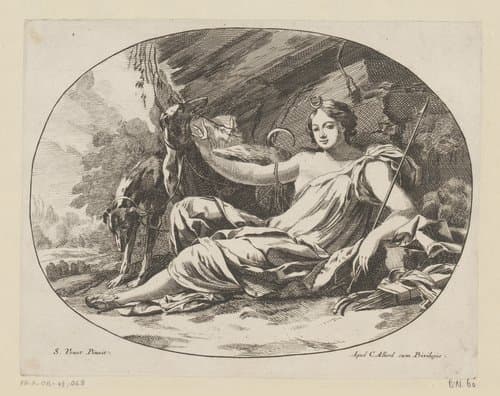
**Diana**, an exquisite engraving from around 1638, captures the Roman goddess of the hunt in a poised, dynamic pose. Created by Dutch engraver and publisher Carel Allard in collaboration with French artist Michel Dorigny, this work exemplifies the collaborative spirit of 17th-century European printmaking. Dorigny, known for his Baroque flair influenced by his father Nicolas Poussin, likely provided the design, while Allard executed the meticulous plate. Measuring just 167mm by 214mm, it reflects the era's demand for affordable, portable art that brought classical mythology into homes and collections across Europe. Engraving as a medium was revolutionary in the Baroque period, allowing intricate details—like Diana's flowing drapery, bow, and crescent moon headdress—to be reproduced with precision and tonal depth. These prints served as both decorative objects and educational tools, disseminating idealized visions of antiquity amid the Counter-Reformation's embrace of heroic, sensual figures. The presence of Lugt 240, a collector's mark from esteemed connoisseur Frits Lugt, underscores its provenance and enduring appeal to discerning collectors. This small yet powerful piece invites us to marvel at how 17th-century artists transformed myth into intimate masterpieces, bridging ancient lore with Renaissance revival techniques. A testament to printmaking's golden age! (198 words)