
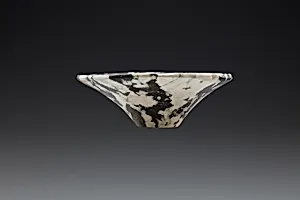
Disc-shaped macehead
Unknown Artist
ca. 3850–3500 B.C.
Medium
Hornblende diorite
Dimensions
Diam. 8 × H. 2.6 cm (3 1/8 × 1 in.)
Classification
Macehead, disc
Period
Predynastic, Naqada l–Early Naqada II
Department
Egyptian Art
Museum
Metropolitan Museum of Art, New York, NY
Credit
Gift of The Egypt Exploration Fund, 1909
Accession Number
09.182.1
Rights
Public Domain
Art Historical Context
Step back in time over 5,000 years to Predynastic Egypt, during the Naqada I to Early Naqada II periods (ca. 3850–3500 B.C.), when communities along the Nile were forging the foundations of one of history's greatest civilizations. This disc-shaped macehead, a modest yet mighty artifact from the Metropolitan Museum of Art's Egyptian Art collection, exemplifies the era's ingenuity. Carved from tough hornblende diorite—a dense, dark stone prized for its durability and sheen—the macehead measures just 8 cm in diameter and 2.6 cm high, small enough to fit in your palm but designed for lethal impact when hafted to a wooden handle. Crafted with remarkable precision, its smooth, polished surface reveals advanced stoneworking techniques long before the pyramids rose. Maceheads like this weren't mere tools; they symbolized power and status, wielded by elites in warfare, rituals, or ceremonies that helped unify early Egyptian society. Sourced possibly from distant quarries, the diorite hints at emerging trade networks, underscoring the cultural shifts toward hierarchy and innovation that paved the way for the Dynastic age. A gift to the Met from the Egypt Exploration Fund in 1909, this unassuming object offers a tangible link to Egypt's formative years, inviting us to ponder the ambitions of its anonymous maker.