
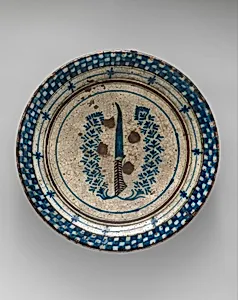
Dish
Unknown Artist
18th century
Medium
Earthenware; underglaze painted and glazed
Classification
Ceramics
Department
Islamic Art
Museum
Metropolitan Museum of Art, New York, NY
Credit
Rogers Fund, 1908
Accession Number
08.96.2
Rights
Public Domain
Art Historical Context
This elegant 18th-century earthenware dish, crafted by an unknown artist, exemplifies the refined ceramics tradition of the Islamic world. Housed in the Metropolitan Museum Art's Islamic Art department and acquired through the Rogers Fund in 190, it features underglaze painting—a technique where pigments are applied to the unfired clay body before a transparent glaze is added and the piece is fired. This method ensured vibrant, durable colors that withstood daily use, distinguishing Islamic pottery for its technical innovation and aesthetic appeal. Produced during a period when Islamic ceramics flourished across regions like Persia, the Ottoman Empire, and beyond, such dishes served both practical and decorative purposes in households. The earthenware medium, fired at relatively low temperatures, allowed artisans to create thin, lightweight forms ideal for serving food. Underglaze decoration often drew from nature-inspired motifs or geometric patterns, reflecting cultural values of harmony, symmetry, and avoidance of figurative imagery in religious contexts. As a testament to anonymous mastery, this dish highlights the collaborative workshops of the era, where skilled potters, painters, and glaze-makers elevated everyday objects into art. Visitors can appreciate how it bridges utility and beauty, offering a window into 18th-century Islamic life and craftsmanship.