
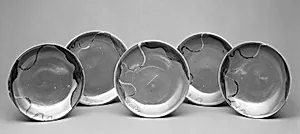
Dish
Unknown Artist
second half of the 17th century
Medium
Stoneware with iron glaze and blue-drip glaze (Shimoshirakawa Arita ware, Suisaka type)
Dimensions
H. 1 1/4 in. (3.2 cm); Diam. 5 7/8 in. (14.9 cm)
Classification
Ceramics
Culture & Period
Japan · Edo period (1615–1868)
Department
Asian Art
Museum
Metropolitan Museum of Art, New York, NY
Credit
The Harry G. C. Packard Collection of Asian Art, Gift of Harry G. C. Packard, and Purchase, Fletcher, Rogers, Harris Brisbane Dick, and Louis V. Bell Funds, Joseph Pulitzer Bequest, and The Annenberg Fund Inc. Gift, 1975
Accession Number
1975.268.580
Rights
Public Domain
Art Historical Context
This exquisite dish, crafted by an unknown artist in Japan's Edo period (second half of the 17th century), exemplifies the refined ceramics of Shimoshirakawarita ware, Suisaka type. Measuring just 1¼ inches high and nearly 6 inches in diameter, its shallow form suggests use as a sake cup or small serving vessel, perfect for intimate tea gatherings or daily rituals that defined Edo-era life. Produced in the Arita region of Kyushu—Japan's hub for innovative pottery—this stoneware piece reflects the period's booming ceramic industry, fueled by peace, prosperity, and technical exchanges with Korean potters. The dish's standout feature is its dual glazes: a rich iron glaze for warm, earthy tones and a striking blue-drip glaze that creates dynamic, fluid patterns as it melts in the kiln. These techniques highlight Arita potters' mastery of high-fired stoneware, prized for durability and subtle beauty over fragile porcelain. The interplay of glazes not only enhances aesthetic appeal but also nods to wabi-sabi ideals—embracing imperfection and natural flow. Housed in the Metropolitan Museum of Art's Asian Art Department as part of The Harry G. C. Packard Collection, this dish offers a window into Japan's Edo ceramic legacy, where everyday objects became artful expressions of harmony and craftsmanship.