
Dish (piatto)
Unknown Artist
ca. 1510
Medium
Maiolica (tin-glazed earthenware)
Dimensions
Diameter: 17 1/8 in. (43.5cm)
Classification
Ceramics-Pottery
Culture
Italian, Deruta
Department
Robert Lehman Collection
Museum
Metropolitan Museum of Art, New York, NY
Credit
Robert Lehman Collection, 1975
Accession Number
1975.1.1075
Rights
Public Domain
Tags
Art Historical Context
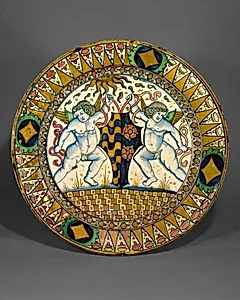
This stunning maiolica dish, crafted around 1510 in Deruta, Italy, exemplifies the Renaissance mastery of-glazed earthenware. a generous 17⅛ inches in diameter, the *piatto* (Italian for dish) was likely designed for display as much as use, adorning the tables of affluent households. Deruta, a thriving ceramics hub in Umbria, became renowned for its vibrant, colorful wares during this period, exporting them across Europe and influencing decorative arts far beyond Italy. The dish's surface, enlivened by the tin-glaze technique, features playful *putti*—those cherubic, winged children symbolizing joy and innocence, a motif beloved in Renaissance art from paintings to pottery. This glazing method created a smooth, white canvas for bold blues, yellows, and greens, fired at low temperatures to preserve vivid hues without cracking. Such pieces bridged utility and fine art, showcasing artisans' skill in narrative motifs drawn from classical mythology and everyday whimsy. Now part of the Robert Lehman Collection at The Metropolitan Museum of Art since 1975, this anonymous masterpiece highlights Deruta's golden age of maiolica production, when workshops rivaled painting studios in prestige and innovation. Visitors, imagine it gleaming on a 16th-century banquet table, whispering tales of Renaissance revelry!