
清 瑪瑙蛙蟹碟|Dish with frog and crab
Unknown Artist
18th century
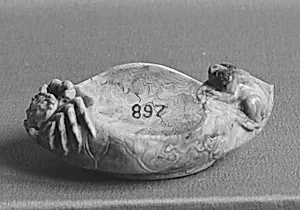
Medium
Pinkish and lavender agate
Dimensions
H. 1 in. (2.5 cm)
Classification
Hardstone
Culture & Period
China · Qing dynasty (1644–1911)
Department
Asian Art
Museum
Metropolitan Museum of Art, New York, NY
Credit
Gift of Heber R. Bishop, 1902
Accession Number
02.18.897
Rights
Public Domain
Tags
Art Historical Context
This exquisite *Dish with Frog and Crab*, crafted in the 18th century during China's Qing dynasty (1644–1911), showcases the era's mastery of hardstone carving. Fashioned from a single piece of pinkish and lavender agate—a semiprecious chalcedony prized for its vibrant hues and natural translucency—the shallow dish stands just 1 inch (2.5 cm) high. Artisans cleverly exploited the stone's veining and color variations to depict a frog and crab in vivid, lifelike forms, emerging seamlessly from the material as if alive. Qing imperial workshops excelled in such lapidary techniques, transforming raw agate into scholarly objects or curios for elite collectors. The frog and crab motifs, common in Chinese art, evoke nature's whimsy and may symbolize prosperity or resilience, though their precise meaning here remains interpretive. This piece highlights the dynasty's opulent aesthetic, blending technical precision with the stone's inherent beauty. A gift to the Metropolitan Museum of Art from Heber R. Bishop in 1902, it exemplifies the refined tastes of Qing connoisseurs and invites visitors to ponder the delicate balance of human craft and nature's palette.