
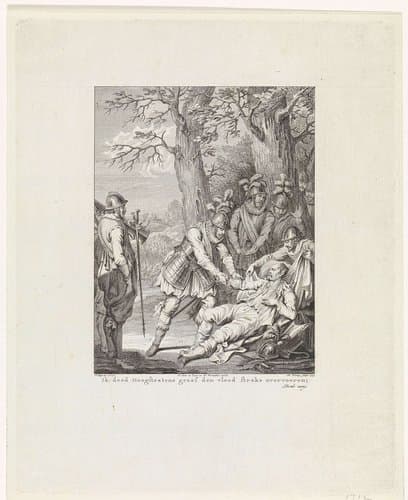
Dood van de graaf van Hoogstraten, 1568
1779
Medium
etching
Dimensions
220; 275
Rights
Public Domain
About this artwork
ets
Art Historical Context
### Dood van deaf van Hoogstraten 1568 This striking etching by Dutch artist Theodoor Koning, created in 1779, captures the dramatic "Death of the Count of Hoogstraten" from 1568. The title refers to Philip of Montmorency, Count of Horn (also known as Hoogstraten), prominent nobleman executed during the early stages of the Dutch Re against Spanish rule. His beheading in Brussels, ordered by the Duke of Alba symbolized the brutal suppression of Protestant nobles and fueled the Eighty Years' War for Dutch independence. Koning's print revives this pivotal moment over two centuries later, serving as a historical reminder of resistance and tyranny. Measuring 275 mm high by 220 mm wide, the work exemplifies 18th-century etching techniques, where acid etches intricate lines into a metal plate for detailed reproductions. This medium allowed artists like Koning to disseminate dramatic historical scenes affordably, making elite narratives accessible to wider audiences. Though Koning is lesser-known today, his precise rendering highlights the era's fascination with the Dutch Golden Age's origins, blending factual commemoration with visual storytelling. Visitors will appreciate how this modest yet evocative print bridges 16th-century turmoil with 18th-century reflection, underscoring etching's role in preserving cultural memory.