
Dood van Napoleon Bonaparte
Medium
striking (metalworking)
Dimensions
4.1; 38.17
Rights
Public Domain
About this artwork
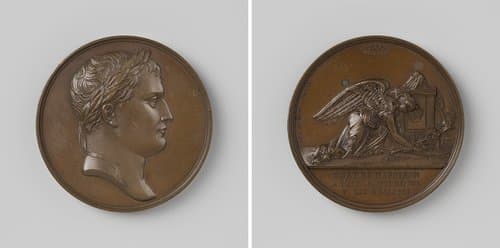
Bronzen penning. Voorzijde: borststuk man met lauwerkrans. Keerzijde: onder sterrenkrans knielt gevleugelde vrouw bij altaar, waarvan basis letter N in medaillon draagt om lauwer- en palmtak neer te leggen; in andere hand, waar plooi van haar mantel over ligt, houdt zij lauwerkrans en bazuin; aan haar voeten ligt gebroken scepter; afsnede: opschrift
Art Historical Context
**Dood van Napoleon Bonaparte** (Death of Napoleon Bonaparte), a bronze medal struck in 1821 by Frenchlassical artist and engraver Nicolas Guy Antoineet, captures the dramatic legacy of one of history's most polarizing figures. Measuring just 4.1 cm in diameter and weighing 38.17 grams, this intimate metalwork exemplifies the art of striking—where intricate designs are hammered into metal under high pressure, allowing for fine details in a durable, portable form. Created shortly after Napoleon's death exile on St. Helena May 5, 1821, it reflects the era's mix of mourning and mythic reverence for the emperor among his admirers. The obverse features a bust of Napoleon adorned with a laurel wreath, evoking classical heroes and his undying fame. On the reverse, a winged female figure—likely symbolizing Fame or Victory—kneels beneath a starry wreath before an altar emblazoned with an "N" medallion. She offers laurel and palm branches in tribute, while clutching a laurel wreath and trumpet in her other hand, with a broken scepter at her feet signifying fallen power. An inscription in the exergue adds a poignant eulogy. Brenet's neoclassical precision elevates this medal from mere commemoration to a cultural artifact, blending allegory with historical reverence. Popular in 19th-century Europe, such pieces fueled Napoleonic legend, bridging art, politics, and personal devotion for collectors and admirers alike.