
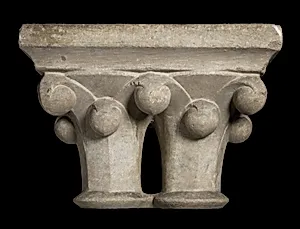
Double Column
Unknown Artist
13th–14th century
Medium
Marble
Dimensions
a: Capital: 17 1/4 × 24 5/8 × 17 in., 319 lb. (43.8 × 62.5 × 43.2 cm, 144.7 kg) b: Base: 8 1/8 in. × 20 in. × 11 1/2 in. (20.6 × 50.8 × 29.2 cm)
Classification
Sculpture-Architectural
Culture
French
Department
Medieval Art
Museum
Metropolitan Museum of Art, New York, NY
Credit
Gift of J. Pierpont Morgan, 1916
Accession Number
16.32.10a, b
Rights
Public Domain
Art Historical Context
Step into the world of medieval French architecture with *Double Column*, a striking marble sculpture from the th–14th century This architectural element consists of a finely carved capital (17¼ × 24⅝ × 17 inches, weighing 319 pounds) paired with a sturdy base (8⅛ × 20 × 11½ inches), exemplifying the precision and grandeur of Gothic-era stonework. Likely salvaged from a grand cathedral or abbey, it showcases the era's mastery in sculpting durable, load-bearing supports that blended function with ornate beauty. In 13th–14th century France, during the height of Gothic innovation, columns like this formed the backbone of soaring cathedrals such as Notre-Dame or Chartres. Carved from marble, a prized medium for its luminosity and workability, these pieces supported vaults while their foliated capitals evoked natural motifs—acanthus leaves or fantastical flora—symbolizing spiritual growth amid divine light flooding through stained glass. The unknown artisan's skill in balancing mass and elegance highlights the collaborative genius of medieval workshops. A generous gift to the Metropolitan Museum of Art from J. Pierpont Morgan in 1916, *Double Column* invites us to ponder the anonymous hands that built Europe's enduring skylines. Though detached from its original setting, it whispers of faith, engineering, and artistry that defined a transformative age.