
Double-page Illustration from Vol. 2 of "Picture Book of Spring Brocades (Ehon haru no nishiki)"
1771
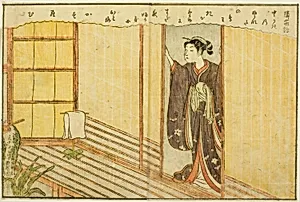
Medium
Color woodblock print; double-page illustration from book
Dimensions
17.9 × 26.8 cm (7 1/16 × 10 9/16 in.)
Classification
woodblock print
Department
Arts of Asia
Museum
Art Institute of Chicago
Accession Number
34705
Rights
Public Domain
Art Historical Context
Suzuki Harunobu's *Double-page Illustration from Vol. 2 of "Picture Book of Spring Brocades (Ehon haru no nishiki)"* (1771) captures the vibrant spirit of Edo-period Japan through the lens of ukiyo-e, the "pictures of the floating world." Harunobu, a pioneering printmaker, revolutionized woodblock printing in the 1760s by introducing full-color techniques, moving beyond earlier rose-tinted (benizuri-e) prints to lush, multi-hued compositions. This double-page spread from his ehon—or picture book—exemplifies his mastery, blending delicate imagery with the tactile intimacy of a bound volume, sized at 17.9 × 26.8 cm for intimate viewing. The artwork's medium, color woodblock print, highlights innovative carving and printing processes where multiple blocks were inked in varied colors and precisely overlaid for depth and realism. Harunobu's style often featured graceful courtesans, seasonal motifs, and everyday elegance, evoking spring's renewal in "brocades" of floral splendor. Produced during Japan's Genroku era of cultural flourishing, these prints democratized beauty, bridging elite woodblock traditions with popular tastes. Housed in the Art Institute of Chicago's Arts of Asia department, this piece invites visitors to savor Harunobu's enduring legacy: a window into 18th-century Japan's refined aesthetics and fleeting pleasures.
About the Artist
Suzuki Harunobu · 1725–1770
Suzuki Harunobu (c. 1725-1770) was a Japanese ukiyo-e artist who revolutionized woodblock printing by developing nishiki-e—full-color prints using multiple woodblocks—in 1765. Before Harunobu, Japanese prints were limited to two or three colors; his innovation unleashed the entire artist's palette, transforming ukiyo-e into the vibrant art form that would later captivate Western artists from Manet...