
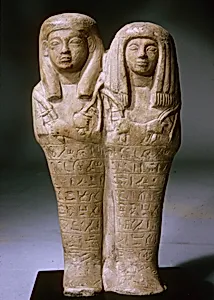
Double Shabti of Khaemwaset and Mesyt
Unknown Artist
ca. 1336–1213 B.C.
Medium
Limestone
Dimensions
H. 22 cm (8 11/16 in.)
Classification
Shabti, double, Khaemwaset, Mesyt
Period
Late New Kingdom
Department
Egyptian Art
Museum
Metropolitan Museum of Art, New York, NY
Credit
Gift of Edward S. Harkness, 1922
Accession Number
22.9.6
Rights
Public Domain
Tags
Art Historical Context
Step into the enchanting world of ancient Egypt with the *Double Shabti of Kemwaset and Mes*, a poignant limestone figurine from the Late New Kingdomca. 1336–1213 B.C.), spanning late Dynasty 18 to early 19. Standing at 22 cm tall, this delicately carved piece depicts a standing couple, likely spouses, captured in the iconic Egyptian style: rigid yet graceful postures with one foot forward, arms at their sides, and finely detailed faces and attire. Crafted from limestone—a favored medium for its workability and affordability—this shabti exemplifies the era's masterful stone carving techniques. Shabtis, or "ushabtis," were magical servant figures buried with the elite to perform laborious tasks in the afterlife, activated by inscribed spells from the Book of the Dead. The "double" form here unites Khaemwaset and Mesyt in eternity, adorned with hieroglyphs invoking their service. Such artifacts highlight the Egyptians' profound beliefs in immortality and the afterlife's demands, reflecting social hierarchies where even the deceased needed help. Donated to the Metropolitan Museum of Art in 1922 by Edward S. Harkness, this rare pair offers a window into personal devotion amid the grandeur of pharaonic Egypt.