
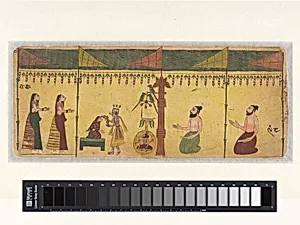
Double-sided folio from a Ramayana series
Unknown Artist
ca. 1690–1710
Medium
Opaque watercolor on paper
Dimensions
4 3/16 × 10 7/8 in. (10.7 × 27.7 cm)
Classification
Manuscripts
Culture & Period
India, Himachal Pradesh, unidentified sub-school · Pahari period
Department
Asian Art
Museum
Metropolitan Museum of Art, New York, NY
Credit
Purchase, Nancy Fessenden Gift, 2018
Accession Number
2018.361
Rights
Public Domain
Art Historical Context
This exquisite double-sided folio from aayana series, created around 1690–1710 in theari hills of Himachal Pradesh,, offers a glimpse into the devotional world of Hindu epic storytelling. Part of a manuscript tradition, it illustrates key episodes from the Ramayana, the ancient Sanskrit poem recounting Prince Rama's quest to rescue his wife Sita from the demon king Ravana. by an unidentified artist from a sub-school in this vibrant hill region, such folios were prized by regional rulers and nobles, blending spirituality with artistic patronage during the Pahari period (17th–19th centuries). Crafted in opaque watercolor on paper—a technique hallmark of Pahari painting—the folio's vivid hues of red, gold, and green bring dynamic scenes to life on both sides. These paintings, often compact like this 4 3/16 × 10 7/8 in. page, showcase the school's delicate line work, flattened perspectives, and emotive figures influenced by Mughal aesthetics yet rooted in local folk traditions. Opaque watercolors allowed for bold, jewel-like saturation, making the pages glow under candlelight in royal libraries. Today, at The Metropolitan Museum of Art (acquired through the Nancy Fessenden Gift in 2018), this folio highlights the Ramayana's enduring cultural resonance in South Asia, where it shapes festivals, dance, and ethics. Visitors can appreciate how these manuscripts preserved oral epics visually, bridging art, religion, and history in the Himalayan foothills.