
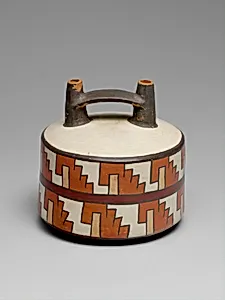
Double Spout Bottle
Unknown Artist
2nd–4th century
Medium
Ceramic, slip
Dimensions
H. 4 1/2 × Diam. 4 3/4 in. (11.4 × 12.1 cm)
Classification
Ceramics-Containers
Culture
Nasca
Department
Arts of Africa, Oceania, and the Americas
Museum
Metropolitan Museum of Art, New York, NY
Credit
Gift of Conny and Fred Landmann, 1992
Accession Number
1992.60.6
Rights
Public Domain
Art Historical Context
This exquisite Double Spout Bottle, crafted by an unknown Nasca artist between the 2nd and 4th centuries CE, the masterful ceramics of the ancient Nasca culture from Peru's south coast. Standing just 4½ inches tall, this ceramic vessel with slip decoration belongs to a tradition of finely made pottery that blended utility with artistry. The Nasca, who thrived from around 100 BCE to 800 CE, were renowned for their vibrant polychrome ceramics, often featuring double-chambered forms connected by a bridge spout—a clever design that allowed liquids to be poured from one spout while air entered the other, preventing spills. The use of slip, a liquid clay mixture painted onto the unfired surface, enabled the Nasca to create intricate, colorful motifs before firing, resulting in durable, glossy finishes. These bottles frequently depicted animals, plants, or mythical beings, reflecting the culture's deep connection to nature, agriculture, and ritual life. As containers for liquids like chicha (fermented corn beer), they played roles in daily use, ceremonies, and burials, offering glimpses into Nasca cosmology. Housed in the Metropolitan Museum of Art's Arts of Africa, Oceania, and the Americas department, this piece—gifted by Conny and Fred Landmann in 1992—highlights the technical innovation and aesthetic sophistication of pre-Inca Andean art, inviting us to ponder the hands that shaped it over 1,700 years ago.