
Double Stamp
Unknown Artist
3rd–12th century
Medium
Wood; carved
Dimensions
Ht. 1 1/4 in. (3.2 cm) Diam. 2 1/16 in. (5.3 cm)
Classification
Wood
Department
Islamic Art
Museum
Metropolitan Museum of Art, New York, NY
Credit
Gift of Helen Miller Gould, 1910
Accession Number
10.130.1166
Rights
Public Domain
Tags
Art Historical Context
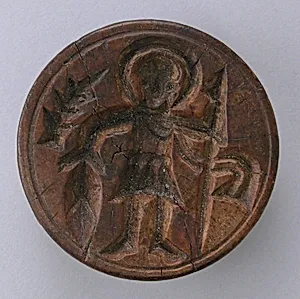
Nestled in the Metropolitan Museum of Art's Islamic collection, *Double Stamp* is a carved wood artifact (Ht. 1¼ in., Diam. 2⅛ in.), gifted by Helen Miller Gould in 0. Dating to the vast span of the 3rd–12th century, this unassuming object exemplifies the everyday artistry of early Islamic civilizations, where functional items doubled as expressions of skill and culture. Its small, cylindrical form suggests it served as a seal or stamp, likely pressed into clay, wax, or ink to authenticate documents, mark ownership, or decorate textiles—common practices across the burgeoning Islamic world from the Near East to Central Asia. The wood's intricate carving reveals human figures, a motif that highlights the diversity of Islamic art during this era. While later periods favored abstract patterns to align with religious sensitivities, earlier centuries embraced figural representations in secular contexts, blending Persian, Byzantine, and local influences. The "double" aspect implies dual impressions on opposite ends, showcasing economical design and masterful relief techniques that allowed fine details to transfer crisply. This humble survivor offers a window into pre-modern bureaucracy and craftsmanship, reminding us how portable tools carried cultural narratives across trade routes and empires. A testament to anonymous artisans' ingenuity, it invites visitors to appreciate the artistry in the utilitarian.