
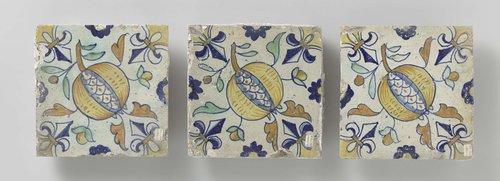
Drie tegels met een geschilderde opengebarsten granaatappel
1600 - 1625
Medium
maiolica
Dimensions
13.3; 0; 13.5
Rights
Public Domain
About this artwork
height 13.3 cm x width 13.5 cm x thickness 0 cm
Art Historical Context
Behold the delicate charm of *Drie tegels met geschilderde opengesten granaatappel ("Three Tiles with a Painted Split-Open Pomegranate"), an masterpiece of early 17th-century maiolica from around 1600–1625. Each square tile measures a modest 13.3 cm high by 13.5 cm wide, perfect for adorning the walls or surrounds of Dutch homes. The central motif—a lush, bursting pomegranate—captures nature's bounty in vivid detail, its ruby seeds spilling forth against a glazed surface that gleams with jewel-like intensity. Maiolica, a tin-glazed earthenware technique originating in Renaissance Italy and flourishing in the Netherlands during the Golden Age, allowed artisans to paint vibrant colors directly onto the unfired clay before a final clear glaze fired at high temperatures. This method produced durable, waterproof tiles ideal for humid interiors like kitchens and fireplaces, where they protected walls while adding artistic flair. Anonymous workshops in Delft and other centers churned out such pieces, blending functionality with folk artistry. Symbolizing fertility, abundance, and prosperity in Dutch culture—echoing biblical and classical motifs—the pomegranate reflects the era's optimism amid trade wealth and still-life painting trends. These tiles offer a glimpse into everyday opulence, inviting us to savor the quiet elegance of 400-year-old craftsmanship.
About the Artist
anonymous
In the vast tapestry of art history, "Anonymous" stands not as a singular individual but as a collective designation for countless unidentified creators whose works have endured across millennia. These artists, spanning prehistoric cave painters to medieval illuminators and folk craftsmen, produced the foundational layers of human visual culture. Prior to the Renaissance, when individual fame emer...