
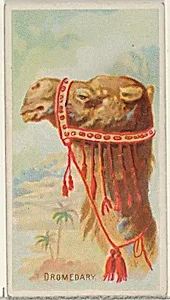
Dromedary, from the Wild Animals of the World series (N25) for Allen & Ginter Cigarettes
Medium
Commercial color lithograph
Dimensions
Sheet: 2 3/4 x 1 1/2 in. (7 x 3.8 cm)
Classification
Prints|Ephemera
Department
Drawings and Prints
Museum
Metropolitan Museum of Art, New York, NY
Credit
The Jefferson R. Burdick Collection, Gift of Jefferson R. Burdick
Accession Number
63.350.201.25.10
Rights
Public Domain
Tags
Art Historical Context
Step into the vibrant world of 19th-century advertising with *Dromedary*, a charming chromolithograph from the 1888 *Wild Animals of the World* series (N25), issued by the pioneering tobacco firm Allen & Ginter. Produced by George S. Harris & Sons, this tiny print—measuring just 2¾ x 1½ inches—was tucked into cigarette packs as a collectible incentive, sparking a craze for trading cards among enthusiasts. The dromedary camel, with its iconic single hump, symbolized exotic adventure and the era's fascination with global wildlife, blending education with commerce. Chromolithography, the medium here, revolutionized commercial printing by layering vibrant colors through multiple lithographic stones, allowing mass production of eye-catching images at low cost. This technique captured the camel's majestic form in vivid detail, making natural history accessible to everyday smokers and children alike. As ephemera, these cards bridged art, science, and marketing, reflecting Victorian America's growing interest in the natural world amid imperial exploration. Today, preserved in The Metropolitan Museum of Art's Jefferson R. Burdick Collection, *Dromedary* offers a window into Gilded Age pop culture. Its diminutive scale belies its cultural punch—part of a tradition that influenced modern trading cards and collectibles. A delightful survivor of disposable luxury!
About the Artist
George S. Harris & Sons|Allen & Ginter (American|American) · | – |
American, Richmond, Virginia|American, Philadelphia