
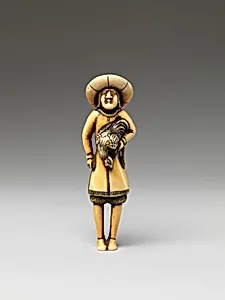
南蛮人牙彫根付|Dutchman with a Rooster
Unknown Artist
late 18th century
Medium
Ivory
Dimensions
H. 3 5/8 in. (9.2 cm); W. 1 1/8 in. (2.8 cm); D. 11/16 in. (1.7 cm)
Classification
Netsuke
Culture & Period
Japan · Edo period (1615–1868)
Department
Asian Art
Museum
Metropolitan Museum of Art, New York, NY
Credit
Gift of Mrs. Russell Sage, 1910
Accession Number
10.211.1444
Rights
Public Domain
Tags
Art Historical Context
This exquisite ivory netsuke, titled *Dutchman with a Ro* (南蛮人牙彫根付), hails from Japan's Edo period (1615–8), specifically the late 18th century.ved by an unknown artist, it measures just 3⅝ inches high, embodying the intricate miniature artistry of netsuke—small toggles worn on kimono sashes to secure inro pouches. The figure depicts a "Nanbanjin," or Southern Barbarian, a Japanese term for Western traders, here portrayed with a lively rooster, blending exotic curiosity with everyday symbolism. During Japan's sakoku isolation policy, contact with foreigners was limited to Dutch merchants at Dejima in Nagasaki. Such carvings captured the fascination with these outsiders, their distinctive features like curly hair and clothing rendered in fine detail through masterful ivory sculpting techniques. Roosters, symbols of vigilance and good fortune in Japanese culture, add layered meaning, perhaps nodding to the foreigners' perceived boldness. Housed in the Metropolitan Museum of Art's Asian Art department (gift of Mrs. Russell Sage, 1910), this netsuke highlights Edo-era craftsmanship and cross-cultural exchange, offering a tangible glimpse into a world of restricted encounters and artistic ingenuity.