
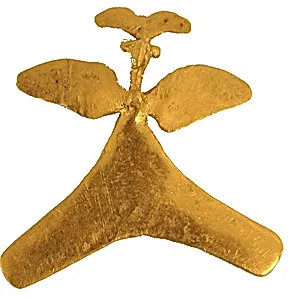
Eagle Pendant
Unknown Artist
11th–16th century
Medium
Gold
Dimensions
H. 1 1/2 in. (3.8 cm)
Classification
Metal-Ornaments
Culture
Veraguas (?)
Department
Arts of Africa, Oceania, and the Americas
Museum
Metropolitan Museum of Art, New York, NY
Credit
Gift of Mica Ertegün, 2008
Accession Number
2008.569.17
Rights
Public Domain
Tags
Art Historical Context
Nestled in the Metropolitan Museum of Art's of Arts of Africa, Oceania, and the Americas, this exquisite *Eagle Pendant* is a delicate masterpiece of pre-Columbian goldsmithing. Crafted from gleaming gold by an unknown artist from the Veraguas culture (or nearby region) of Panama between the 11th and 16th centuries, it just 1 1/2 inches (3.8 cm) in height—perfectly sized for personal adornment as a necklace or earrings. Donated in 2008 by Mica Ertegün, this ornament captures the sophistication of indigenous metalworking in Central America. Gold held profound cultural value for Veraguas peoples, symbolizing wealth, power, and spiritual connections. Artisans likely employed the lost-wax casting technique, a hallmark of pre-Columbian metallurgy, to sculpt the eagle's fierce form with intricate details like outstretched wings and a sharp beak. Eagles, as apex predators, may have embodied strength, vision, and celestial forces in their worldview, making this pendant not just jewelry, but a potent talisman worn by elites during rituals or daily life. Though small, its artistry reflects a vibrant tradition of ornamental metalwork that bridged everyday prestige and sacred symbolism, offering a window into the ingenuity of ancient American cultures before European contact.