
Ear-drop
Unknown Artist
19th century
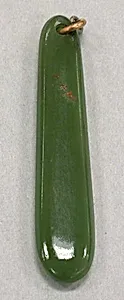
Medium
Nephrite
Dimensions
L. 2 7/16 in. (6.2 cm); W. 1/2 in. (1.3 cm); D. 3/16 in. (0.5 cm)
Classification
Jade
Culture
New Zealand
Department
Asian Art
Museum
Metropolitan Museum of Art, New York, NY
Credit
Gift of Heber R. Bishop, 1902
Accession Number
02.18.809
Rights
Public Domain
Art Historical Context
This delicate *Ear-drop*, crafted from nephrite jade in 19th-century New Zealand, exemplifies the revered tradition of pounamu carving among the Māori people. Measuring just 2 7/16 inches long, this slender ornament was likely worn suspended from the ear, a common adornment that signified status and spiritual connection. Nephrite, known locally as pounamu or "greenstone," is a hard, translucent stone sourced from New Zealand's South Island rivers, prized for its durability and lustrous green hues that evoke the land's natural beauty. In Māori culture, jade objects like this ear-drop held profound significance as *taonga*—treasures embodying ancestral mana (prestige) and worn close to the body for protection and identity. Artisans employed traditional techniques, such as abrading with sandstone and polishing with leaves or skins, to shape the nephrite without metal tools, showcasing remarkable skill and patience. Though the artist remains unknown, the piece reflects a continuity of pre-colonial craftsmanship persisting into the 19th century amid European contact. A generous gift from Heber R. Bishop in 1902, this ear-drop now graces The Metropolitan Museum of Art's Asian Art collection, bridging Oceanic artistry with global appreciation. Visitors are invited to marvel at its tactile elegance, a window into New Zealand's enduring jade legacy.