
Earrings
Unknown Artist
18th century–19th century
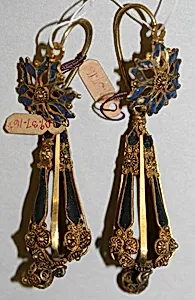
Medium
metal
Classification
Earrings
Culture
European, Eastern
Department
Costume Institute
Museum
Metropolitan Museum of Art, New York, NY
Credit
Rogers Fund, 1909
Accession Number
09.37.16a, b
Rights
Public Domain
Art Historical Context
### Earrings from Eastern Europe Nestled in the Metropolitan Museum of Art's Costume, these *Earrings* hail from Eastern Europe and date to the 18th–19th centuries. Crafted by an unknown artist from metal, they represent the refined jewelry traditions of a region rich in cultural exchanges. Acquired through the Rogers Fund in 1909, this pair invites visitors to explore how personal adornments bridged everyday life and special occasions during a transformative era. The 18th and 19th centuries marked dynamic shifts in Eastern Europe, from Enlightenment influences to the rise of nationalism, amid interactions with Ottoman, Slavic, and Central European styles. Metal earrings like these were essential accessories in women's attire, often denoting social status, regional identity, or festive attire. The choice of metal underscores the era's masterful metalworking—techniques like hammering, soldering, or engraving that ensured durability and subtle elegance, even without gemstones. As artifacts in the Costume Institute, these earrings highlight jewelry's role in costume history, preserving anonymous craftsmanship that spoke volumes about cultural pride. Though modest, they evoke the wearer's world, reminding us how small objects carry big stories of heritage and artistry. (198 words)