
Echtgenoot en de duivel
Medium
etching
Dimensions
103; 63
Rights
Public Domain
About this artwork
height 103 mm x width 63 mm
Art Historical Context
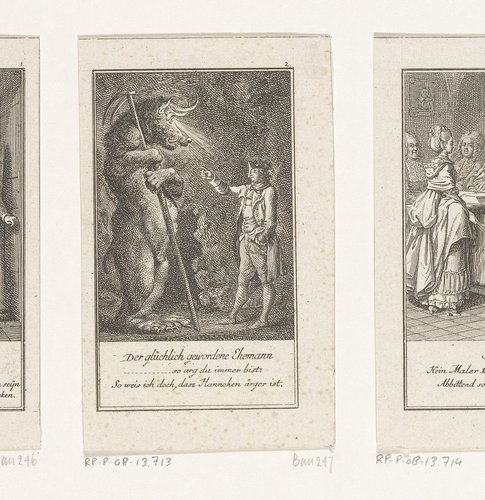
Daniel Nikolaus Chodowie (1726–1801), a prolific Polish-German artist and director of the Prussian Academy of Arts in Berlin, was renowned for his intricate etchings that captured the moral and social nuances of 18th-century life. Created in 1775, *Echtgenoot en de duivel* ("Husband and the Devil") exemplifies his mastery of small-scale narrative scenes, blending satire with everyday realism during the Enlightenment era. Chodowiecki produced over 2,000 prints, often illustrating proverbs, fables, and domestic vignettes that resonated widely across Europe. This etching, measuring just 103 mm high by 63 mm wide, highlights the intimate, portable nature of the medium. Etching involved drawing acid-resistant lines on a copper plate, allowing for fine details and tonal subtleties that mimicked drawing. Its diminutive size made it ideal for book illustrations and affordable dissemination, democratizing art and moral commentary for middle-class audiences. The evocative Dutch title suggests a witty or cautionary tale—perhaps the devil tempting a husband in marital strife—reflecting Chodowiecki's interest in human folly and virtue. Such works contributed to the rise of genre printmaking, influencing later illustrators and offering timeless insights into 18th-century relationships and ethics. A charming window into bygone morals!
About the Artist
Daniel Nikolaus Chodowiecki · 1726–1801
Daniel Nikolaus Chodowiecki (1726–1801) was a German painter and printmaker of Polish-Huguenot descent who became the most celebrated graphic artist in 18th-century Germany. Born in Danzig (now Gdańsk), he created approximately 2,000 etchings that serve as an invaluable visual record of German bourgeois life during the Enlightenment. Largely self-taught, Chodowiecki moved to Berlin in 1743 and ach...