
Edging
Unknown Artist
late 18th century
Medium
Bobbin lace
Dimensions
L. 37 x W. 3 1/4 inches 94.0 x 8.3 cm
Classification
Textiles-Laces
Culture
Flemish
Department
European Sculpture and Decorative Arts
Museum
Metropolitan Museum of Art, New York, NY
Credit
Gift of Henry Livingston Lee, through his daughter Mrs. F.S. Crofts, 1931
Accession Number
31.31.3
Rights
Public Domain
Art Historical Context
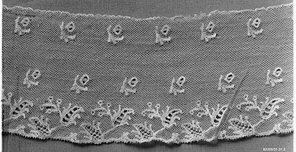
This exquisite bobbin lace edging, crafted by an unknown Flemish artist in the late 18th century, exemplifies the pinnacle of European textile artistry. Measuring 37 inches long and just 3¼ inches wide, this delicate strip was designed as a decorative border for garments, linens, or furnishings. Bobbin lace, a technique where fine threads are twisted and interwoven using small bobbins pinned to a pillow, allowed for intricate patterns that showcased the lacemaker's precision and patience—skills honed in Flanders, a historic center of lace production. Flemish lace flourished from the 16th to 18th centuries, with bobbin lace particularly prized for its durability and complex motifs compared to finer needle laces. By the late 1700s, amid shifting fashions from opulent Rococo to restrained Neoclassicism, such edgings trimmed elite wardrobes, symbolizing wealth and refined taste. This piece reflects that legacy, its narrow form ideal for ruffles, cuffs, or hems. Now in the Metropolitan Museum of Art's European Sculpture and Decorative Arts collection—gifted in 1931—this edging invites visitors to marvel at the unseen labor behind everyday luxury, a testament to Flanders' enduring cultural contribution to decorative arts.