
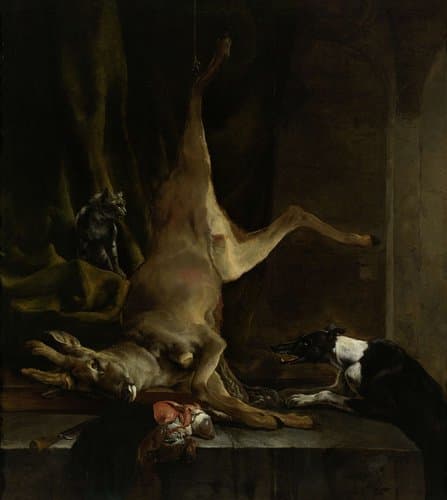
Een hond en een kat bij een half geslachte ree
1645 - 1660
Medium
oil on canvas
Dimensions
12; 46; 180; 162
Rights
Public Domain
About this artwork
buitenmaat: diepte 12 cm (drager incl. SK-L-2595)
Art Historical Context
Step into the Rijksmuseum and encounter *Een hond en een kat bij half geslachte ree (A Dog and a Beside a Half-Butchered Deer), a masterful oil on canvas by Jan Baptist Weenix, painted 1645 and 1660. This monumental work, measuring 180 cm high by 162 cm wide, captures poignant still-life scene: a loyal dog and curious cat stand sentinel over a freshly hunted roe deer, its fur partially skinned to reveal raw flesh. Weenix, a leading Dutch Golden Age painter, specialized in such evocative "game pieces," blending hyper-realistic detail with subtle narrative tension. In the prosperous Dutch Republic of the 17th century, these paintings celebrated the era's wealth and hunting culture among the elite, while hinting at vanitas themes—life's transience amid abundance. Weenix's technique shines in his masterful handling of oil paint: velvety fur textures, glistening blood, and dramatic chiaroscuro lighting create a trompe l'oeil effect, drawing viewers into an almost tangible world. His style evolved from early influences like Jan Steen toward a refined realism, often incorporating Italianate landscapes in the background. This large-scale canvas, weighing 46 kg with its 12 cm deep frame, exemplifies the technical ambition of Dutch still life. It not only showcases Weenix's skill in rendering lifelike animals but also reflects cultural fascination with nature's bounty, making it a captivating window into 17th-century life.