
Eerste verjaardag van de Belgische revolutie op de Place des Martyres
1831
Medium
striking (metalworking)
Dimensions
64.2; 4.9
Rights
Public Domain
About this artwork
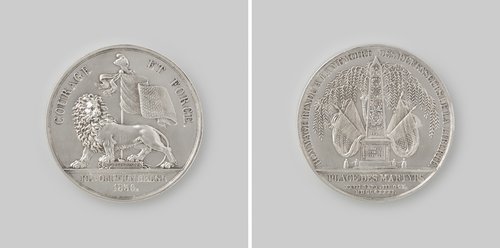
Zilveren penning. Voorzijde: leeuw met verbroken ketenen staande voor Belgische vlag, waaraanvrijheidsmuts en wimpel hangen binnen omschrift; afsnede: opschrift. Keerzijde: obelisk metster en vier lauwerkransen met daarin opschrift; op sokkel opschrift; rond monument viervaandels en treurwilg binnen omschrift; afsnede: opschrift
Art Historical Context
Crafted in 1831 by medallist M. Borrel *Eerste verjaard van de Belgische revolutie de Place des Martyres is a finely struck silver medal (4.9 cm diameter, 64.2 g) commemorating the first anniversary of's 1830 Revolution This pivotal uprising against Dutch rule secured Belgian independence, with Place des Martyres in Brussels—site of a mass grave for revolutionaries—serving as a sacred symbol of sacrifice and triumph. Such medals were popular in the 19th century as portable emblems of national pride, blending numismatic precision with patriotic fervor. The obverse features a majestic lion, Belgium's heraldic symbol, standing triumphant with broken chains before the national flag adorned with a liberty cap and pennant—evoking freedom from oppression. Encircling inscriptions and an exergue add solemn text. The reverse depicts a starry obelisk monument flanked by four laurel wreaths (honoring victory and valor), banners, and a weeping willow for the martyrs, all within ornate borders and inscriptions. These neoclassical motifs underscore the era's revolutionary iconography. Struck in silver, the medal showcases expert metalworking techniques like high-relief detailing and crisp engraving, ensuring durability for wear or display. As a tangible relic of Belgium's birth, it invites reflection on how art immortalizes history's turning points.