
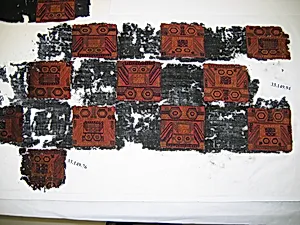
Embroidered Mantle Fragment
Unknown Artist
5th–2nd century BCE
Medium
Camelid hair
Dimensions
Overall: 12 1/2 x 31 in. (31.75 x 78.74 cm) Other: 12 1/2 in. (31.75 cm)
Classification
Textiles-Woven
Culture
Paracas
Department
Arts of Africa, Oceania, and the Americas
Museum
Metropolitan Museum of Art, New York, NY
Credit
Gift of George D. Pratt, 1933
Accession Number
33.149.94
Rights
Public Domain
Art Historical Context
This exquisite *Embroidered Mantle*, crafted by an unknown Paracas artist between the 5th and 2nd centuries BCE, offers a glimpse into one of ancient Peru's most sophisticated textile traditions. Hailing from the Paracas on Peru's southern coast, this piece is made from finely woven camelid hair—likely from llamas or alpacas—measuring 12½ x 31 inches.acas textiles, often found in elite burials, showcase the society's mastery of weaving and embroidery, using vibrant natural dyes to depict mythical felines, warriors, and supernatural beings. The fragment's embroidery technique is particularly remarkable: artists used a stem-stitch method on a plain-weave ground, creating intricate, stepped motifs that symbolized the Paracas worldview, blending human, animal, and divine realms. These mantles were status symbols, draped over the deceased in bundle burials to ensure safe passage to the afterlife. Though incomplete, this survivor highlights the durability of camelid fibers in Peru's arid climate, preserving colors that have endured over 2,000 years. Now at the Metropolitan Museum of Art, gifted by George D. Pratt in 1933, it invites us to marvel at Paracas ingenuity—where thread became a canvas for cosmology and craft.