
Enrico Ambanelli
probably 16th century
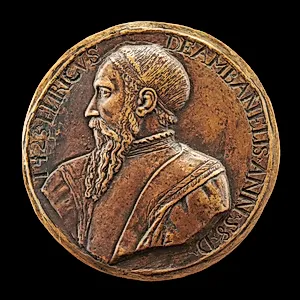
Medium
bronze
Dimensions
overall (diameter): 6.97 cm (2 3/4 in.) gross weight: 129.15 gr (0.285 lb.)
Classification
Sculpture
Department
CSD
Museum
National Gallery of Art, Washington, D.C.
Credit
Samuel H. Kress Collection
Accession Number
1957.14.1113
Rights
Public Domain
Art Historical Context
This bronze sculpture, titled *Enrico Ambanelli* and attributed to an Italian artist of the 16th century, offers a glimpse into Renaissance portraiture. Created during a period when Italy led Europe in artistic innovation, the work likely commemorates its subject through a small, circular format typical of the era. Such pieces often served as personal or diplomatic gifts, capturing the likeness and status of notable figures in a durable medium. Bronze casting allowed sculptors to achieve fine details and a rich patina that has endured for centuries. Measuring just under three inches in diameter, this intimate object highlights the technical skill required to model in relief, blending classical influences with contemporary humanist ideals. Its presence in the National Gallery of Art’s Samuel H. Kress Collection underscores its value as both an artwork and a historical document. Visitors can appreciate how these portable bronzes connected art, memory, and social prestige in 16th-century Italy. Though the precise maker remains unidentified, the sculpture exemplifies the Renaissance fascination with individual achievement expressed through elegant, lasting forms.
About the Artist
Italian 16th Century · 1500–1599
"Italian 16th Century" refers to a collective attribution for anonymous painters and sculptors active in Italy during the 16th century, a period bridging the High Renaissance and Mannerism. These artists, often working in workshops of masters like Titian, Veronese, and Tintoretto, remain unidentified due to the collaborative nature of Renaissance production. Their early lives and training are not ...