
Etudes Progressives de Figures Pittoresques à l'usage des Paysagistes, par Férogio
1839 - 1845
Medium
lithography
Dimensions
417; 289
Rights
Public Domain
About this artwork
height 289 mm x width 417 mm
Art Historical Context
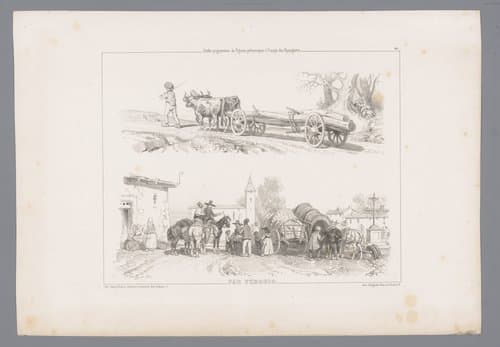
**Etudes Progressives de Figurestoresques à l'usage Paysagistes, par Férogio** Created by French artist Fortuné Féio between 1839 1845, this lithograph measures 289 mm in height by 417 mm in width exemplifies the practical artistry of the Romantic era. Férogio, known for his detailed figure studies, produced this work as a valuable resource for landscape painters—known as *paysagistes*. title, translating to "Progressive Studies of Pictures Figures for the Use of Painters," reveals its educational purpose: offering models of charming, everyday figures to populate vast scenic compositions, a technique called *staffage*. Lithography, the medium here, was revolutionary in the 19th century, allowing artists to reproduce intricate drawings with fine tonal gradations directly from stone plates. This affordable method democratized art education, enabling students and professionals to study progressive poses—from simple outlines to fully rendered forms—enhancing their ability to add human warmth and narrative to idyllic landscapes. In the context of France's burgeoning interest in plein-air painting and genre scenes, Férogio's series bridged classical training with emerging Romantic ideals, celebrating the picturesque in ordinary life. A true gem for aspiring artists, it reminds us how such modest prints fueled the creativity behind grand vistas.