
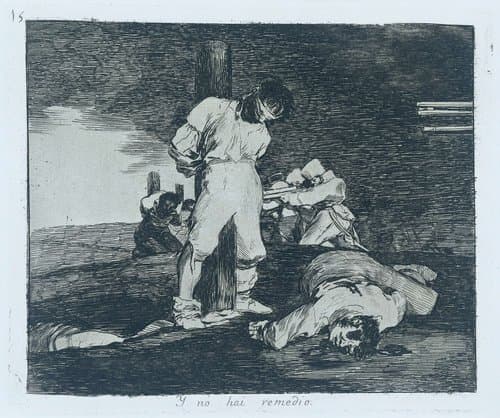
Executies van gevangen die staand aan palen gebonden zijn
Medium
etching
Dimensions
167; 140
Rights
Public Domain
About this artwork
Het betreft een postume druk.
Art Historical Context
Francisco de Goya's etching *Executies van gevangen staand aan palenonden zijn* (Executions of Prisoners Tied Standing to Posts) captures a harrowing scene of brutality, likely inspired by the horrors of war. Created as part of Goya's unflinching social commentary, this work exemplifies his Romantic style—dark, expressive, and profoundly humanist—where he exposed the savagery of conflict without romanticizing it. Dated 1863, well after Goya's death in 1828, this is a posthumous impression, printed from his original plates, preserving his raw vision for future generations. Etching, Goya's preferred medium here, allowed for intricate detail and tonal depth through acid-bitten lines on a copper plate. Measuring just 140mm by 167mm, its small scale intensifies the intimacy of the terror: bound prisoners facing execution, evoking the Spanish Peninsular War (1808–1814) against Napoleonic forces. Goya's series like *The Disasters of War* used such prints to critique violence and human suffering, blending realism with emotional power. This posthumous edition, released decades later, underscores Goya's enduring legacy as a pioneer of modern art, influencing artists from Picasso to contemporary war photographers. A stark reminder of history's atrocities, it invites visitors to reflect on the cost of power and the artist's role as witness.