
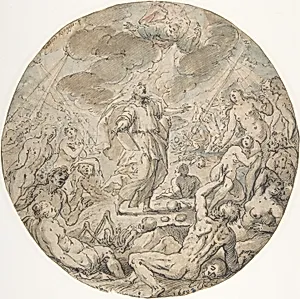
Ezekiel in the Valley of the Dry Bones
late 16th–mid-17th century
Medium
Pen and black ink, and brown, blue and pink wash
Dimensions
diameter: 7 11/16 in. (19.6 cm)
Classification
Drawings
Department
Drawings and Prints
Museum
Metropolitan Museum of Art, New York, NY
Credit
Van Day Truex Fund and The Elisha Whittelsey Collection, The Elisha Whittelsey Fund, 2005
Accession Number
2005.26
Rights
Public Domain
Tags
Art Historical Context
In the Metropolitan Museum of Art's Drawings and Prints department, *Ezekiel in the Valley the Dry Bones* captivates with its dramatic depiction of the biblical Ezekiel's vision from the Book of Ezekiel (chapter 37). Attributed to Swiss artists Gotthard Ringgli or Georgcham, this late 16th- to mid-17th work falls within the transition from Mannerism to Baroque, where heightened emotion and dynamic compositions prevailed. The circular format (tondo), measuring just 7 11/16 inches in diameter, suggests it may have been a preparatory study or an independent collector's piece, emphasizing intimacy and focus. Rendered in pen and black ink with subtle brown, blue, and pink washes, the drawing masterfully builds depth and atmosphere. Ink lines provide precise contours for the skeletons, skulls, and nude figures—both male and female—evoking the miraculous resurrection of dry bones into living beings, a powerful symbol of spiritual revival and hope for ancient Israel. The washes add tonal modeling and faint color, heightening the eerie yet transcendent mood typical of religious imagery from this era. This rare survival offers insight into Northern European draftsmanship, blending theological narrative with anatomical study. Acquired through the Van Day Truex Fund and Elisha Whittelsey Collection in 2005, it invites visitors to ponder themes of renewal amid decay.