
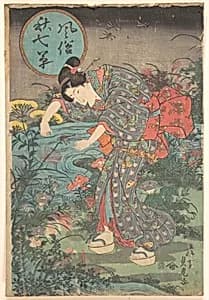
Fashionable Seven Autumn Plants (Fūzoku aki nanakusa)
first half of the 19th century
Medium
Woodblock print; ink and color on paper
Dimensions
Image: 15 in. × 10 1/8 in. (38.1 × 25.7 cm)
Classification
Prints
Culture & Period
Japan · Edo period (1615–1868)
Department
Asian Art
Museum
Metropolitan Museum of Art, New York, NY
Credit
Museum Accession
Accession Number
JP1093.5
Rights
Public Domain
Tags
Art Historical Context
This woodblock print, *Fashionable Seven Autumn Plants*, captures the refined elegance of the Edo period through its depiction of women amid seasonal flora and delicate dragonflies. Created by Toyohara Sad in the first half of 19th century, work belongs to the vibrant tradition of Japanese ukiyo-e prints, which celebrated contemporary life, beauty, and nature. Measuring about 15 by 10 inches, it was produced using ink and color on paper, a technique that allowed artists to reach wide audiences with affordable, reproducible images. The title references the classic motif of the “seven autumn plants,” a poetic grouping of seasonal grasses and flowers long celebrated in Japanese literature and art for evoking transience and quiet beauty. Here, Sadatora presents them in a “fashionable” context, blending natural elements with stylish female figures to reflect the tastes of urban viewers during the late Edo era. The inclusion of dragonflies adds a lively, fleeting touch, underscoring themes of seasonal change. As a museum accession in the Metropolitan Museum of Art’s Asian Art collection, this print exemplifies how Edo-period woodblock artists merged observation of nature with ideals of grace and modernity, offering today’s visitors a window into Japan’s rich cultural appreciation for the rhythms of the seasons.