
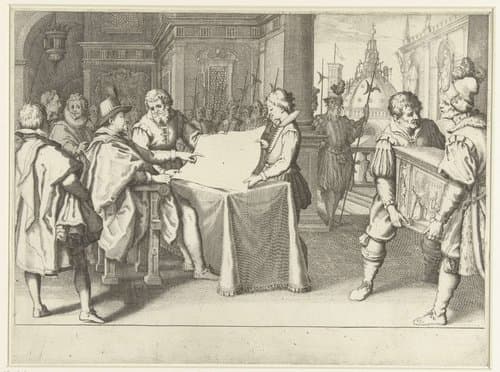
Ferdinando I de' Medici volgt de restauratie van de Santa Maria del Fiore te Florence
1614 - 1620
Medium
engraving
Dimensions
222; 300
Rights
Public Domain
About this artwork
verzamelaarsmerk, verso linksonder, gestempeld: Lugt 240
Art Historical Context
This exquisite engraving by Jacques Callot, titled *Ferdinando I de' Medici de restauratie van de Maria del Fiore te Florence (Ferdinando I' Medici Oversees the Restoration of Santa Maria del Fiore in Florence), captures pivotal moment of Renaissance legacy in action. Created between 1614 and 1620, it measures 222 × 300 mm and showcases Duke Ferdinando I de' Medici (r. 1587–1609), founder of the Medici dynasty's Tuscan grandeur, supervising repairs on Florence's iconic Duomo, the Santa Maria del Fiore cathedral. Though dated after his death, the scene likely commemorates his patronage of the city's architectural heritage, blending historical reverence with Baroque splendor. Callot, a French-born master engraver active at the Medici court from 1610, revolutionized printmaking with his innovative use of the *échoppe* burin tool. This allowed unprecedented line variation—from delicate swells to crisp hatching—producing intricate details of scaffolding, workers, and the Duomo's massive dome by Brunelleschi. His style, rooted in the Baroque emphasis on drama and movement, immortalized Florence's cultural vitality, making complex scenes accessible through affordable prints. Bearing a collector's mark (Lugt 240) on the verso, this work exemplifies Callot's influence on European art dissemination, bridging courtly patronage and public appreciation of Italy's enduring masterpieces.
About the Artist
Jacques Callot · 1592–1635
Jacques Callot (1592–1635) was a French printmaker and draftsman from the Duchy of Lorraine, widely regarded as one of the first great artists to practice the graphic arts exclusively. His more than 1,400 etchings chronicled the breadth of 17th-century life, from Medici court festivities to the brutal realities of warfare. Callot revolutionized etching through technical innovations including the é...