
Ferret
Unknown Artist
6th century
Medium
Copper alloy, "tinned" surface
Dimensions
Overall: 1 5/8 x 11/16 x 3/16 in. (4.2 x 1.7 x 0.5 cm)
Classification
Metalwork-Copper alloy
Culture
Frankish
Department
Medieval Art
Museum
Metropolitan Museum of Art, New York, NY
Credit
Gift of J. Pierpont Morgan, 1917
Accession Number
17.191.270
Rights
Public Domain
Art Historical Context
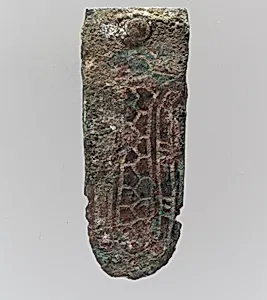
This charming copper alloy figurine, titled *Ferret*, captures the lively form of the mischievous mammal in exquisite miniature detail. Crafted by an unknown Frankish artist in the 6th century, it measures just 1⅝ × 11/16 × 3/16 inches, small enough to fit in the palm of your hand. "tinned" surface thin layer of tin applied over the copper alloy—gives it silvery sheen, mimicking precious silver while protecting the metal from corrosion, a clever technique in early medieval metalworking. Hailing from the Frankish culture of Merovingian Gaul (modern-day France and Germany), this piece dates to a transformative era when the Franks unified much of Western Europe under Clovis I and his successors. Animal figures like this ferret were popular in Frankish art, possibly serving as amulets, decorative mounts, or symbols of cunning and vitality in a world blending pagan and emerging Christian traditions. Its survival highlights the skill of itinerant metalworkers who produced such finely wrought objects amid political upheaval. Today, *Ferret* resides in the Metropolitan Museum of Art's Medieval Art department, a gift from J. Pierpont Morgan in 1917. It offers a window into everyday artistry of the early Middle Ages, reminding us how even tiny creatures could embody a culture's ingenuity and whimsy.