
Field Ensign
Unknown Artist
possibly 15th–16th century
Medium
Steel
Dimensions
L. 14 3/4 in. (37.47 cm); W. 6 1/8 in. (15.6 cm)
Classification
Shafted Weapons
Culture
possibly Turkish
Department
Arms and Armor
Museum
Metropolitan Museum of Art, New York, NY
Credit
Gift of William H. Riggs, 1913
Accession Number
14.25.466
Rights
Public Domain
Tags
Art Historical Context
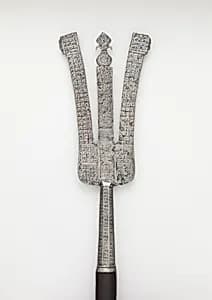
This elegant steel *Field Ensign*, likely from the 15th 16th century, the artistry of Ottoman Turkish arms and armor. Measuring 14¾ inches long and6⅛ inches wide, this shafted weapon component—probably finial or banner head mounted on a pole—served as a military standard in battlefields. Arabic-influenced design reflects the fusion of Islamic motifs and warfare needs, where such ensigns identified units and rallied troops amid the chaos of combat. Crafted from durable steel, the ensign showcases the era's advanced metalworking techniques, prized for their strength and resistance to the rigors of field use. Turkish armorers were renowned for producing finely forged pieces that balanced functionality with symbolic grandeur, often incorporating calligraphic or geometric elements evoking Arabic script. Though the artist remains unknown, the object's precision highlights the guild-like expertise of anonymous craftsmen in the Islamic world. A generous gift from William H. Riggs in 1913, this piece now resides in the Metropolitan Museum of Art's Arms and Armor Department. It offers visitors a tangible glimpse into the martial splendor of early modern Turkey, where weapons doubled as emblems of power and identity.