
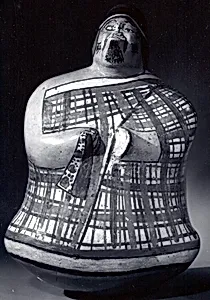
Figure Bottle
Unknown Artist
4th–6th century
Medium
Ceramic, pigment
Dimensions
H. 8 1/2 in. (21.59 cm)
Classification
Ceramics-Containers
Culture
Nasca
Department
Arts of Africa, Oceania, and the Americas
Museum
Metropolitan Museum of Art, New York, NY
Credit
Gift of Mr. and Mrs. Nathan Cummings, 1964
Accession Number
64.228.65
Rights
Public Domain
Tags
Art Historical Context
This enchanting *Figure Bottle* from theca culture of ancient Peru, dating to the 4th–6th century, stands as a testament to the ingenuity of pre-Columbian ceramic artists. Crafted from ceramic with applied pigments, this modest vessel—measuring just 8½ inches tall—likely served both practical and ritual purposes, embodying the Nasca tradition of transforming everyday containers into lively human forms. The tag "Men" suggests it depicts a male figure a common motif in Nasca pottery that brought deities, warriors, or everyday people to life. Nasca ceramics are celebrated for their vibrant polychrome slips—liquid clay pigments fired to create bold, enduring colors—and innovative modeling techniques. Artisans skillfully sculpted the bottle's body to mimic human anatomy, often with double spouts or stirrup handles for pouring liquids like chicha (corn beer) during ceremonies. This piece highlights the culture's artistic peak during Peru's South Coast, where pottery conveyed spiritual beliefs, social status, and cosmology, bridging the mundane and the divine. Today, housed in the Metropolitan Museum of Art's Department of Arts of Africa, Oceania, and the Americas (gift of Mr. and Mrs. Nathan Cummings, 1964), it invites us to marvel at Nasca ingenuity—over 1,500 years old, yet vividly alive.