
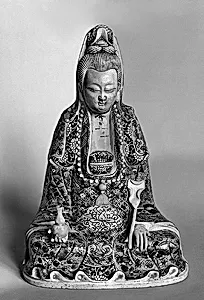
Figure of bodhisattva Guanyin
Unknown Artist
19th century
Medium
Porcelain painted in overglaze polychrome enamels (Jingdezhen ware)
Dimensions
H. 9 1/2 in. (24.1 cm)
Classification
Ceramics
Culture & Period
China · Qing dynasty (1644–1911)
Department
Asian Art
Museum
Metropolitan Museum of Art, New York, NY
Credit
Bequest of Benjamin Altman, 1913
Accession Number
14.40.216
Rights
Public Domain
Tags
Art Historical Context
This delicate porcelain figure of Guanyin, the bodhisattva of compassion embodies the spiritual heart of Qing dynasty China (1644–1911). Crafted in the 19th century at Jingdezhen—the renowned imperial porcelain capital—this 9½-inch (24.1 cm) statue Guanyin in a serene, graceful pose, adorned with flowing robes and intricate details. Such devotional objects were cherished in Buddhist households and temples, symbolizing mercy, protection, and benevolence, as Guanyin listens to the world's suffering and offers aid. The artwork's medium—porcelain painted in overglaze polychrome enamels—highlights advanced ceramic techniques perfected in Jingdezhen. After glazing and high-temperature firing, vibrant enamels in reds, blues, golds, and greens were applied and fired at lower temperatures, yielding luminous, durable colors resistant to wear. This method allowed for exquisite narrative scenes and floral motifs, blending functionality with artistry and reflecting the Qing era's opulent aesthetic amid growing global trade in Chinese export porcelain. Now in the Metropolitan Museum of Art's Asian Art Department, thanks to the 1913 bequest of collector Benjamin Altman, this piece invites visitors to appreciate China's enduring fusion of faith, craftsmanship, and beauty.