
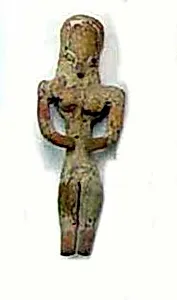
Figure of Fertility Goddess
Unknown Artist
ca. 2700–3000 BCE
Medium
Terracotta
Dimensions
H. 5 7/8 in. (14.9 cm); W. 2 1/8 in. (5.4 cm); D. 1 7/8 in. (4.8 cm)
Classification
Ceramics
Culture
Baluchistan
Department
Asian Art
Museum
Metropolitan Museum of Art, New York, NY
Credit
Gift of Jeannette and Jonathan Rosen, 2001
Accession Number
2001.794.222
Rights
Public Domain
Tags
Art Historical Context
This small terracotta figure, created around 2700–3000 BCE in the Baluchistan region of present-day Pakistan, represents one of the earliest known depictions of a fertility goddess from South Asia. Standing just under six inches tall, the sculpture belongs to the broader cultural sphere associated with the Indus Valley Civilization. Such figures were likely used in household rituals or as votive offerings, embodying themes of fertility, abundance, and the life-giving forces central to early agricultural societies. Crafted from terracotta, the piece reflects the widespread ancient practice of modeling clay by hand before firing, a technique that allowed for intimate, portable devotional objects. Though details are worn by time, the stylized form—typical of prehistoric goddess imagery—emphasizes exaggerated hips and breasts, underscoring its symbolic role rather than naturalistic portraiture. These early sculptures offer valuable glimpses into the spiritual beliefs of communities that predate written records in the region. Housed in the Metropolitan Museum’s Asian Art collection, this artifact highlights the deep roots of goddess worship across ancient cultures and connects visitors to the shared human impulse to honor life’s generative powers through art.