
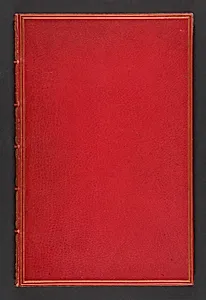
Figures françoises et comiques nouvellement inventées par M. Watteau; Figures de modes dessinées et gravées à l'eau forte par Watteau; a terminées au buin par Thomassin le fils
Dimensions
[12], [8] leaves; Height: 10 1/4 in. (26 cm)
Department
The Libraries
Museum
Metropolitan Museum of Art, New York, NY
Credit
Gift of Jayne Wrightsman, 2008
Accession Number
NE2049.5.W38 W38 1710
Rights
Public Domain
Art Historical Context
This exquisite album of engravings titled *Figures françoises et comiques*, showcases designs by Antoine Watteau, the celebrated French painter who helped define the Rococo style in the early eighteenth century. between roughly 1710 and 1720, the volume contains twelve leaves of French and theatrical figures alongside eight leaves of fashion plates. Watteau’s lively drawings were etched in soft, expressive lines by the artist himself and then finished with the burin by engravers such as Henri Simon Thomassin, Louis Desplaces, and Charles Nicolas Cochin I, giving the prints both delicate texture and crisp detail. Measuring just over ten inches in height, these portable sheets were intended for collectors, artists, and fashionable audiences who wished to study Watteau’s elegant poses and costumes. The prints capture the graceful, slightly playful spirit of the period—courtiers, commedia dell’arte characters, and stylish Parisians rendered with Watteau’s characteristic lightness of touch. Today preserved in the Metropolitan Museum’s libraries thanks to the generosity of Jayne Wrightsman, the album illustrates how reproductive prints spread Watteau’s inventive vision far beyond his paintings, shaping both artistic training and contemporary taste across Europe.
About the Artist
Antoine Watteau|Charles Nicolas Cochin I|Louis Desplaces|Henri Simon Thomassin|Hardy-Mennil · 1684–1721
Jean-Antoine Watteau, born in 1684 in Valenciennes to a modest family—his father a roofer named Jean-Philippe Watteau—was the second of four sons who displayed an early passion for art. After initial apprenticeship under local painter Jacques-Albert Gérin, he moved to Paris around 1702, working in workshops copying Flemish and Dutch genre scenes. By 1705, he entered the studio of Claude Gillot, ab...