
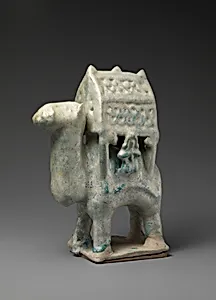
Figurine in the Form of a Camel Carrying a Palanquin and Two Riders
Unknown Artist
12th–early 13th century
Medium
Stonepaste; molded in sections, glazed in turquoise
Dimensions
H. 7 11/16 in. (19.5 cm) W. 5 9/16 in. (14.1 cm) D. 2 9/16 in. (6.5 cm) Wt. 21.7 oz. (615.3 g)
Classification
Ceramics
Department
Islamic Art
Museum
Metropolitan Museum of Art, New York, NY
Credit
Fletcher Fund, 1964
Accession Number
64.59
Rights
Public Domain
Tags
Art Historical Context
This delightful stonepaste figurine, crafted in the 12th to early 13th century captures a camel laden with a palanquin carrying two riders, evoking vibrant caravan culture of the medieval Islamic world. Standing just under 8 inches tall, the turquoise-glazed ceramic piece showcases the ingenuity of artisans who molded it in sections for intricate detailing before firing. The lustrous turquoise glaze, a of Islamic ceramics from regions like Iran or Central Asia, not only protected the fragile stonepaste body—a composite of quartz, clay, and frit designed to mimic porcelain—but also lent it an otherworldly shimmer reminiscent of precious gems. In the Islamic artistic tradition, such figurines served both decorative and narrative purposes, illustrating everyday scenes of travel and elite transport. Camels, vital for trans-Saharan and Silk Road trade, symbolized endurance and prosperity, while the palanquin hints at the luxury enjoyed by merchants or officials. This rare surviving example highlights the technical prowess of Seljuk-era potters, who elevated ceramics to sculptural art, blending functionality with whimsy. Today, housed in the Metropolitan Museum of Art's Islamic Art department, it invites visitors to ponder the interconnected worlds of commerce and craftsmanship that shaped Islamic civilizations.